
CUSTOMIZINGBOX Content Team
The old POD playbook—cheap designs, low-price competition—no longer works.
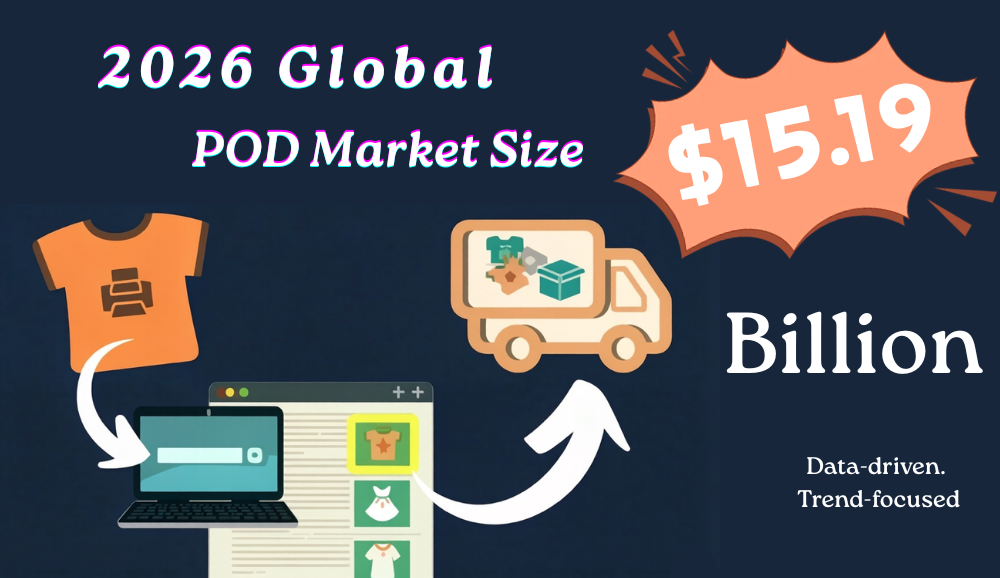
If you've been in print-on-demand for a while, you've probably felt it: traffic costs more, competition is fiercer, and that T-shirt design that sold 100 units last year barely moves 20 this year. It's not your imagination. The global POD market is projected to grow from $9.34 billion in 2024 to $54.73 billion by 2032—a CAGR of 24.8%. But here's the catch: the market is growing, yet the margins for "generic sellers" are shrinking.
In 2026, selling products isn't enough. You need to sell a brand.
This guide will show you why the "just sell stuff" model is failing, what a POD brand actually is, and how to build one step by step.
Why "Just Selling Products" No Longer Works
The Commodity Trap
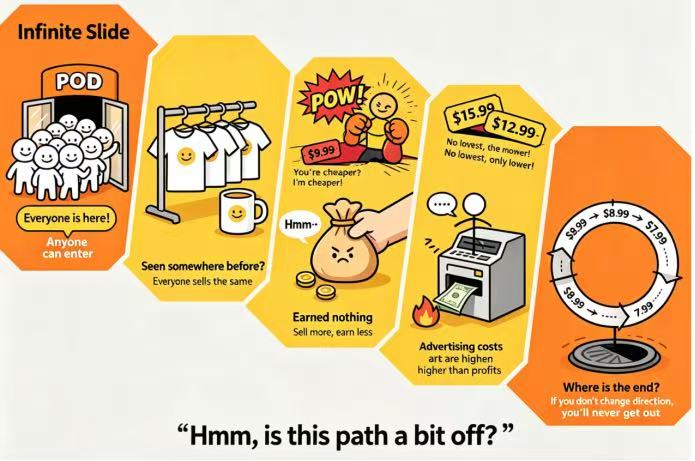
When your product is seen as something "you can get anywhere," price becomes the only competitive lever. This is a race no one wins—especially for sellers who don't own production lines and rely on thin intermediary margins.
The numbers tell the story:
- Average conversion ad costs in apparel range from $10 to $25 per conversion, depending on audience and creative quality.
- Ads cost more upfront—early sales often cost more than the product's profit margin.
- Customer acquisition costs eat up the largest share of profit, leaving little room for reinvestment.
In other words: you spend more, earn less. Even when you make a sale, the margin is thin. A healthy POD seller's net profit margin in 2026 typically falls between 20% and 35%—but only if you price correctly and aren't burning cash on ads.
If you're still struggling with cost-effective traffic acquisition, check out our related guide:How to Drive Traffic to Your POD Store? Practical Ads Playbook for Facebook, Google & TikTok
Can't Keep Customers
The deeper issue is this: if your shop looks just like every other POD shop—same blank products, similar designs, no distinctive brand—customers have no reason to stay loyal.
They'll buy from whoever is cheapest or most convenient. They won't remember you. They won't come back. And they definitely won't recommend you.
The Industry Has Shifted
POD is no longer a "low barrier, easy money" game. Multiple forces are reshaping the competitive landscape:
- Platforms like TikTok Shop and Amazon are tightening fulfillment rules, pushing sellers toward more professional operations.
- Zero-click search results and AI-driven product discovery make organic traffic harder to capture.
- Competition has shifted from "front-end traffic grabbing" to "back-end supply chain depth."
Sellers who treat POD as "upload a design and wait" are heading toward negative ROI. The winners in 2026 will be those who transform from "product sellers" into "providers of self-expression tools."
The bottom line: If you're running a "product store," you're competing on price. If you're running a brand store, you're competing on value. And value always wins.
What Is a POD Brand, Really?
A brand isn't just a logo. It's not a color palette or a catchy tagline—though those help.
A brand is an identity, a set of values, and an emotional connection with your customers. It's what people think and feel when they hear your name. It's why someone pays $35 for your T-shirt instead of $15 for someone else's—not because the cotton is better, but because they feel something.
Personalized products command 25% to 35% higher margins than non-custom ones. Why? Because when a product feels like "this was made for me," customers stop obsessing over fabric weight or print technique and start paying for emotional resonance and uniqueness.
That's brand premium.
Real-World Examples
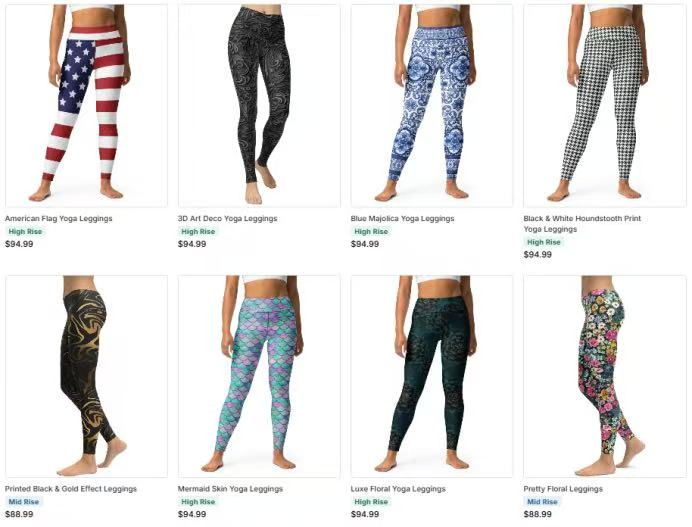
Take FIERCEPULSE, a POD brand that started with a simple leggings idea and grew into a seven-figure business. They didn't try to sell everything to everyone. They focused on one thing: bold, expressive activewear for women—cosmic swirls, chakra art, floral skulls—blending fitness with self-expression. They emphasized inclusivity, offering sizes up to 6XL and showcasing diverse body types.
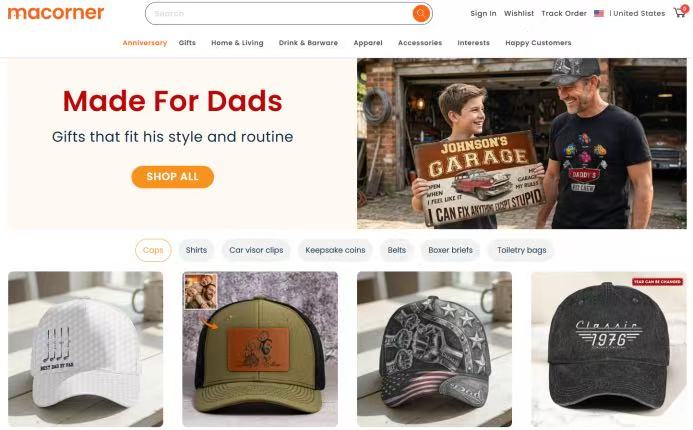
Macorner, another POD success story, generates $38 million annually selling personalized gifts. Their strategy? "Zero inventory + emotional premium"—turning a $15 blank T-shirt into a $60 personalized product.
These brands didn't succeed because they found a "secret product." They succeeded because they built an identity people wanted to belong to.
How to Build Your POD Brand in 2026
Step 1: Find Your Niche (and Own It)
Don't try to sell to everyone. Serve one specific group exceptionally well.
A strong niche does three things for you:
- Gives you a clear marketing target audience
- Reduces unnecessary competition
- Builds loyalty—your customers feel like you "get them"
The most promising POD niches in 2026 are driven by strong emotional demand: pet owners, fitness enthusiasts, home decor lovers, wellness-focused consumers. Personalization stands out as one of the strongest categories because it combines consistent demand with high emotional value.
Action step: Ask yourself three questions—Who is my ideal customer? What do they care about? What can I give them that no one else is giving? Your answers will define everything that follows.
Step 2: Build a Consistent Visual Identity
Your brand visuals—colors, fonts, imagery, packaging—should be instantly recognizable. When someone scrolls past your product on Instagram or Etsy, they should know it's yours before they even read the name.
This doesn't mean you have to hire a professional designer (though it helps). It means:
- Using consistent colors and fonts across all products and marketing
- Creating lifestyle product shots, not just product-on-white
- Maintaining a cohesive aesthetic that reflects your brand personality
FIERCEPULSE's visual branding made it naturally suited for social media—their Instagram feed is filled with bold product close-ups, colorful flat lays, and user-generated content that all looks like it belongs together.
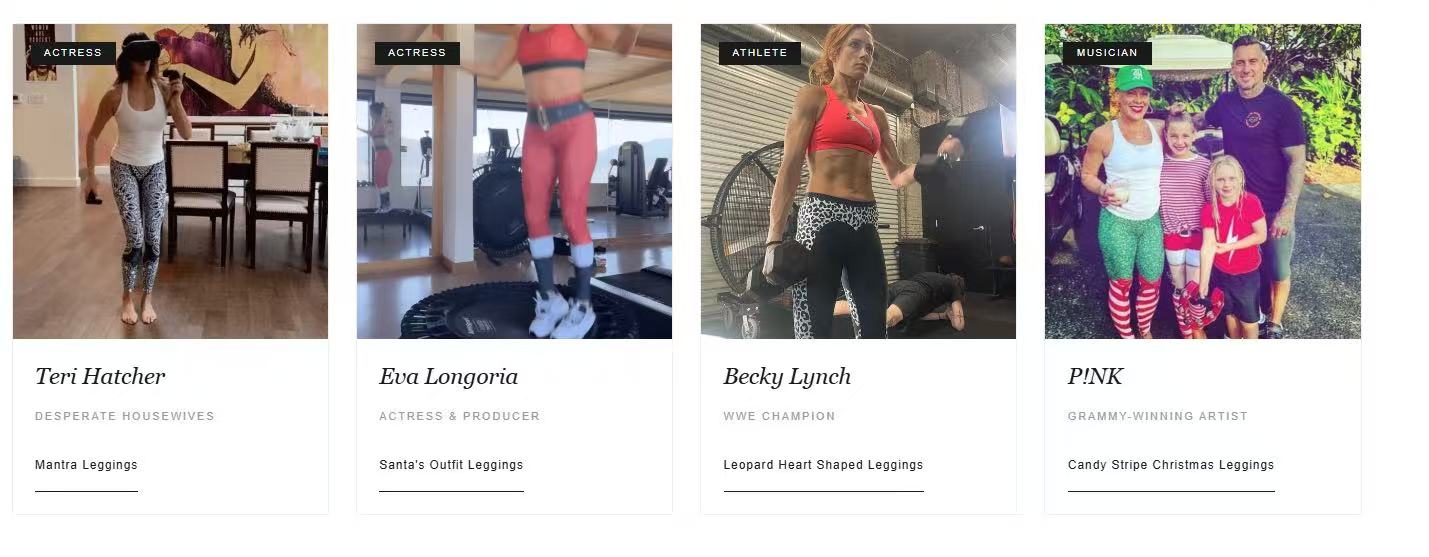
Action step: Pick 2–3 brand colors and 1–2 fonts. Use them everywhere—your Shopify store, Etsy listings, social media, packaging inserts, email marketing. Consistency builds recognition.
Step 3: Design for Your Audience, Not for Everyone
The days of "throw 100 generic designs at the wall and see what sticks" are over. In 2026, you need to design with intention.
This means:
- Creating products people are actively searching for—use keyword research to find high-intent search terms
- Designing for gifting scenarios, leveraging personalization keywords like "custom," "name," "pet," "couple," "teacher"
- Offering personalization options—names, dates, photos, custom text—turning standard products into emotionally resonant, one-of-a-kind pieces
Personalization doesn't just boost margins—it also lifts customer lifetime value (LTV). When buyers participate in the creation process, they become co-creators, forming a psychological bond with your brand that no standard retargeting campaign can replicate.
Action step: Before your next batch of 10 designs, ask yourself: Who is this for? What will they feel when they see it? Would they buy it as a gift for someone they love?
Step 4: Create a Premium Unboxing Experience
Your product doesn't stop mattering once it's printed. Packaging is part of the brand experience.
A custom sticker, a handwritten thank-you note, a piece of branded tissue paper—these small touches cost pennies but create memorable moments that customers share on social media. And that's free advertising.
Research shows that users are significantly more likely to share products they had a hand in designing, creating an organic viral loop that lowers your overall customer acquisition costs.
Action step: Add a branded insert to every package—a simple card with your logo, a thank-you message, and a request to tag you on social media. Track how many people actually do it.
Step 5: Tell Stories and Build Community
People don't just buy products—they buy stories. They buy into brands that stand for something they believe in.
Take Life Is Golden Company, for example. The founder turned his bond with his golden retriever into a thriving brand. He didn't compete on price—he competed on emotional resonance, creating designs that capture what "real dog people actually feel."

Brands that tell stories build communities. Communities build loyalty. Loyalty builds repeat purchases.
Action step: Start sharing your brand's "why." Why did you start? What do you care about? Who are you trying to help? Post behind-the-scenes content, customer stories, and authentic moments that build connection.
The Long-Term Value of Brand Building
Building a brand takes time. It doesn't happen overnight. But the payoff is significant.
Brands command higher prices. When customers feel connected to a brand, price becomes secondary. That's how Macorner sells a $15 T-shirt for $60.
Brands generate repeat customers. Generic stores rely on constant new traffic. Brand stores build loyal audiences who come back—and bring friends.
Brands are more resilient. When algorithms change, platform fees rise, or competition intensifies, brands with loyal followings survive. Commodity sellers get squeezed out.
The POD ecosystem is maturing. POD has evolved from a niche experiment into core infrastructure for independent sellers, creators, and global brands. Those who treat it as a long-term brand-building opportunity—not a quick cash grab—are the ones who will ultimately thrive.
Final Thoughts
In 2026, POD is more accessible than ever. But accessibility means competition. And competition means you need to stand out.
The sellers who win this year won't be the ones with the most designs or the lowest prices. They'll be the ones who build real brands—with clear identities, loyal audiences, and products people actually connect with.
You have a fulfillment partner (that's us). You have tools (AI, print-on-demand platforms, social media). Now you need the vision.
Run your POD business like a brand—not a product store.